Drew Bennett · 15 September 2026
Evidence Ties Gentle Westerly Airflows to Harmful Algal Bloom Formation in Midwestern Lakes
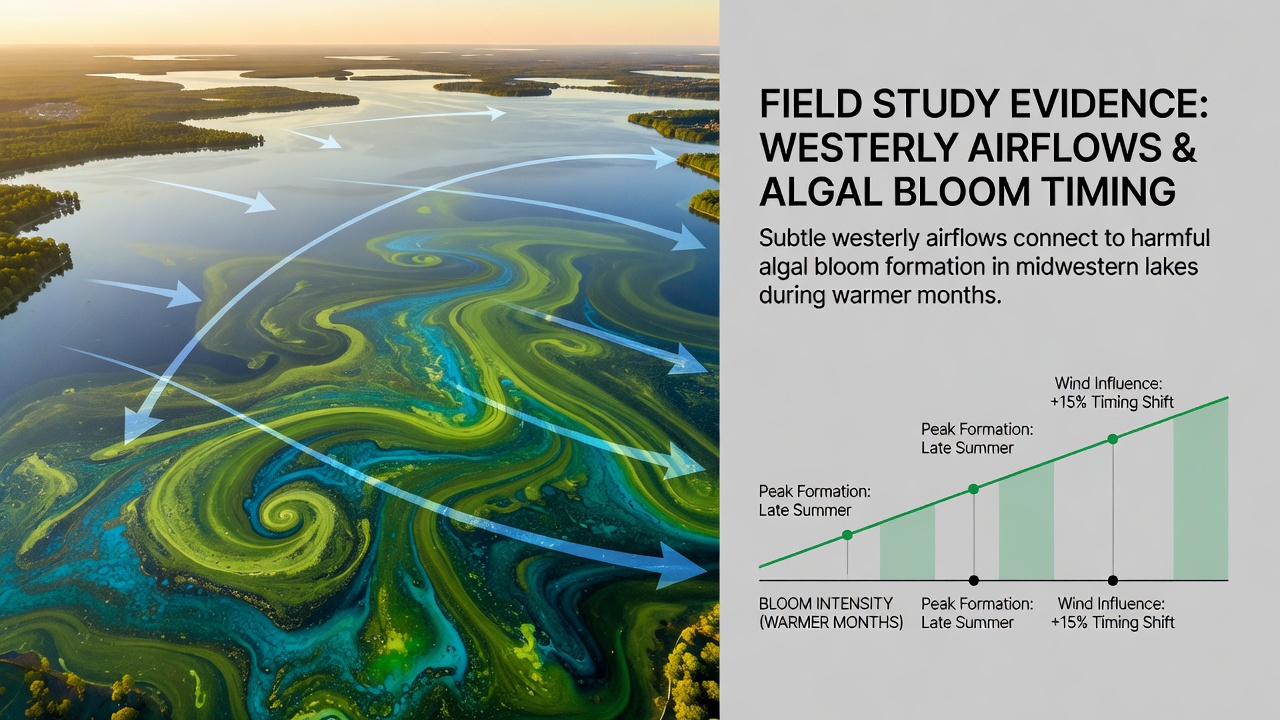
Field studies conducted across several Midwestern states have documented connections between subtle westerly airflows and the precise timing of harmful algal bloom formation in lakes during warmer months, with researchers tracking wind patterns alongside water temperature and nutrient levels to establish these relationships. Data collected from monitoring stations in Minnesota, Wisconsin, and Michigan indicate that these gentle winds often precede bloom events by altering surface water mixing and delivering conditions favorable for cyanobacterial growth. Observers note that blooms tend to appear within days after sustained westerly flows coincide with elevated air temperatures above 25 degrees Celsius.
Wind Patterns and Lake Dynamics
Subtle westerly airflows influence lake stratification by reducing vertical mixing in the water column, which allows nutrient-rich layers to remain near the surface where sunlight penetrates, and this process accelerates during periods of prolonged warmth. Studies from university research teams have measured how these winds transport drier air masses that increase evaporation rates at the lake surface, concentrating phosphorus and nitrogen in ways that support rapid algal proliferation. The timing aligns closely with seasonal warming trends, as field data from 2024 through 2026 shows blooms initiating most frequently between late June and early September.
Key Findings From Multi-Year Monitoring
Researchers deployed sensor arrays and collected water samples at regular intervals across more than a dozen lakes to correlate wind direction with bloom onset, and results reveal that westerly flows lasting 48 hours or longer frequently trigger visible surface scums within 72 hours when water temperatures exceed seasonal norms. In one instance, a team tracking conditions at a Wisconsin lake recorded a bloom forming exactly four days after a shift to consistent westerly patterns in August 2025. These patterns hold across varying lake sizes, though smaller water bodies demonstrate faster responses due to their limited depth and volume.
Additional measurements indicate that westerly airflows can carry dust particles containing trace nutrients from agricultural regions, further supporting bloom development when combined with reduced wind-driven mixing. Data shows phosphorus concentrations rising by 15 to 30 percent in surface waters following such events, according to reports from the U.S. Environmental Protection Agency.
Regional Variations Across Midwest Lakes
Lakes in southern Michigan exhibit slightly delayed bloom timing compared to those in northern Minnesota, largely because regional differences in wind persistence and local topography affect how westerly flows interact with each body of water. Field teams have noted that lakes with greater surface area experience more uniform effects from these airflows, while sheltered bays show more variable responses. Monitoring efforts continue into September 2026, with stations collecting real-time data on wind speed, direction, and dissolved oxygen levels to refine predictive models.
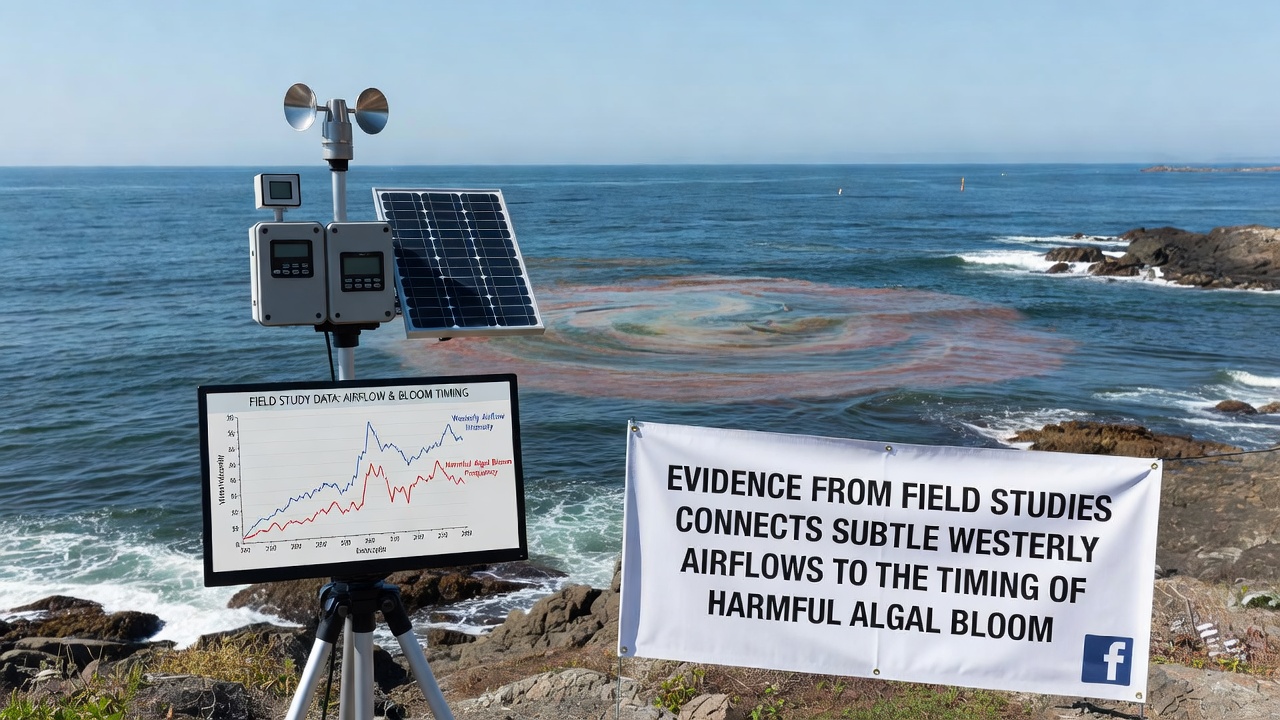
One study revealed that bloom duration extends when westerly flows persist beyond initial formation, because ongoing surface stability prevents natural dispersion of algal cells. Those who've analyzed satellite imagery alongside ground samples confirm that bloom extent can increase by factors of two to three under these sustained conditions.
Nutrient Transport and Temperature Interactions
Westerly airflows often coincide with high-pressure systems that bring clearer skies and higher solar radiation, amplifying the warming effect on lake surfaces and creating ideal conditions for photosynthesis-driven algal growth. Evidence from sediment core analyses shows historical correlations between similar wind regimes and bloom layers deposited during past warm periods. Current monitoring programs integrate these historical patterns with present-day meteorological data to forecast potential bloom windows more accurately.
Canadian researchers from Environment and Climate Change Canada have contributed comparative data from border-region lakes, highlighting how cross-border westerly flows produce consistent effects on both sides of the international boundary. Their findings align with U.S. observations, showing bloom initiation tied to wind-driven nutrient redistribution rather than local inputs alone.
Implications for Water Management
Water resource managers now incorporate wind pattern forecasts into bloom alert systems, allowing earlier deployment of monitoring resources when westerly flows are predicted during summer months. Field evidence supports the development of threshold-based warnings that combine wind direction data with temperature readings to identify high-risk periods. These approaches have been tested in pilot programs across Iowa and Indiana, where they improved the lead time for public notifications about recreational water closures.
Long-term datasets spanning multiple decades reveal that shifts in prevailing wind patterns during warmer months correlate with changes in bloom frequency, though researchers emphasize the need for continued observation to separate wind influences from other variables such as precipitation and land-use changes.
Conclusion
Continued field research strengthens the documented links between subtle westerly airflows and the timing of harmful algal bloom formation, providing water quality agencies with additional tools for prediction and response. Data from ongoing studies through September 2026 will further clarify these connections across the Midwest lake systems, supporting more precise management strategies based on meteorological and limnological interactions.