Zoe Ludwig · 29 September 2026
Southwestern Desert Ecosystems Exhibit Flowering Shifts Linked to Gentle Westerlies
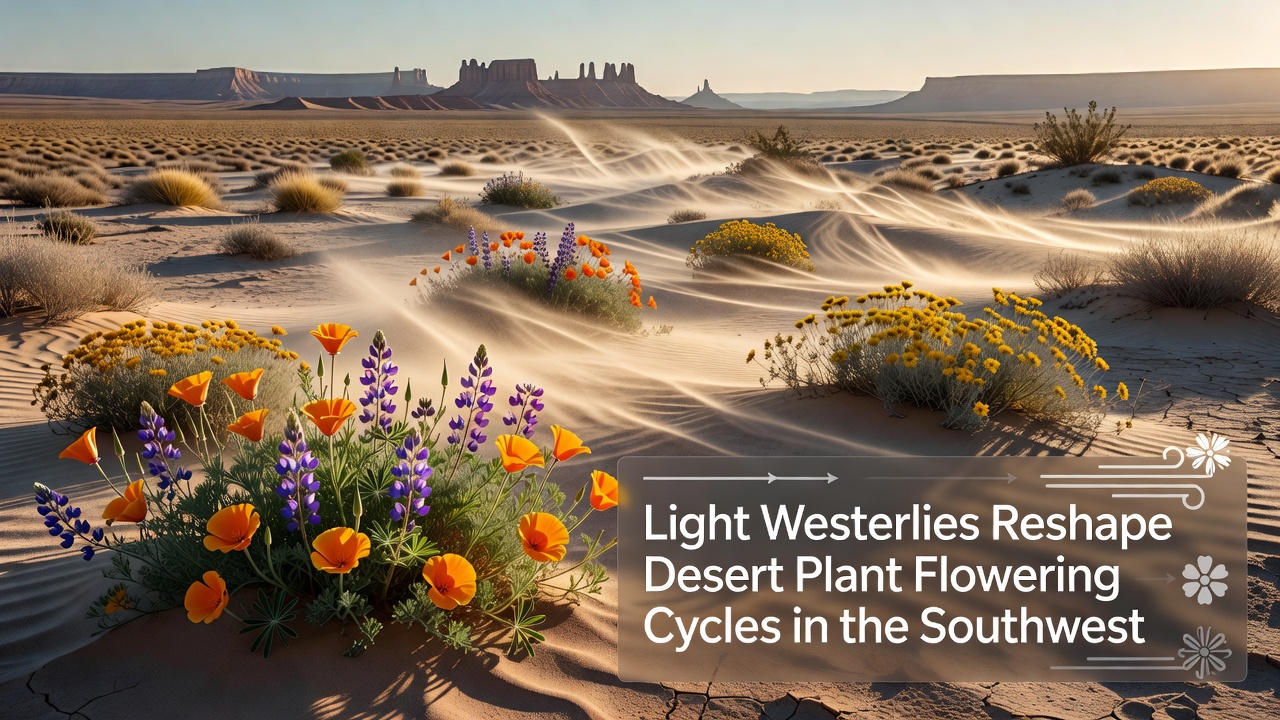
Light westerlies have altered flowering cycles for several key desert plant species across the American Southwest, with researchers documenting measurable changes in bloom timing and duration during recent seasons. Data from monitoring stations in Arizona, New Mexico, and southern California indicate that these gentle airflow patterns correlate with delayed or extended phenological events in species such as creosote bush, ocotillo, and various cacti. Studies conducted by university field teams show that wind direction and consistency influence temperature gradients and moisture distribution, which in turn affect when plants initiate reproductive phases.
Observed Patterns in Plant Responses
Observers note that plants in the Mojave and Sonoran deserts have displayed shifts where peak flowering periods now extend into later months compared to records from previous decades. Researchers at multiple sites recorded that light westerly flows, often below 10 miles per hour, coincide with cooler nighttime temperatures that slow bud development yet sustain soil moisture levels longer than stronger wind events allow. This combination creates conditions where certain annual wildflowers emerge weeks after historical averages, while perennial species maintain blooms through periods that once saw rapid desiccation.
One study revealed that saguaro cacti in central Arizona produced flowers approximately 12 days later on average during years with persistent light westerlies, and similar delays appeared in Joshua tree populations farther west. Data collected through 2025 and into September 2026 confirm these trends hold across elevation gradients, with higher desert plateaus showing more pronounced extensions in flowering windows. Those who've studied this know the effect stems from how these winds interact with regional topography to redistribute humidity without triggering widespread precipitation.
Mechanisms Driving the Changes
Evidence ties these airflow patterns to modifications in evapotranspiration rates and microclimate stability around plant communities. Light westerlies reduce the rapid drying that accompanies stronger winds, allowing shallow root systems to access residual moisture from occasional winter rains into spring and early summer. Researchers discovered that this stability supports prolonged nectar production in flowers, which in turn influences pollinator activity cycles observed at the same sites.
But here's the thing: not all species respond uniformly, as some shrubs accelerate flowering under the same conditions while others delay. Field measurements indicate that soil temperature fluctuations moderated by consistent light winds play a role, with data loggers showing narrower daily ranges during affected periods. According to records from the National Oceanic and Atmospheric Administration, these wind regimes have increased in frequency over the past five years in the Southwest, aligning with the documented phenological adjustments.
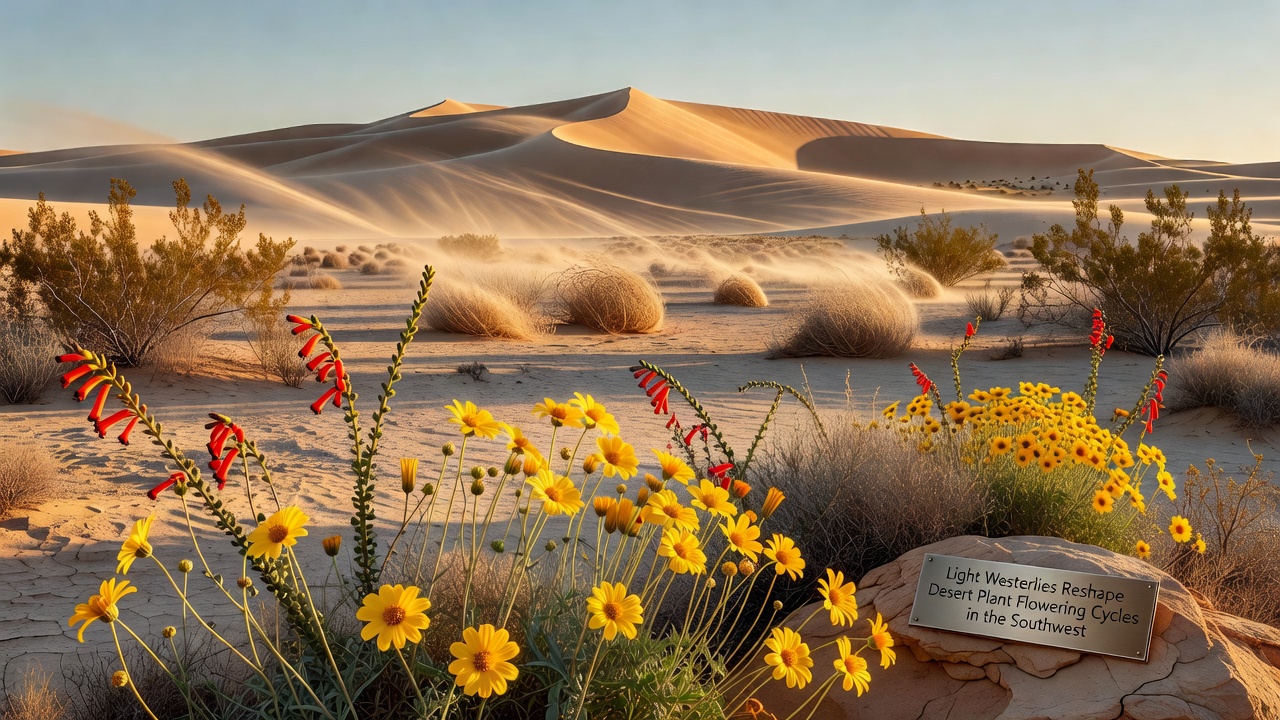
What's interesting involves how these changes ripple through dependent wildlife. Hummingbirds and certain bee species adjust foraging ranges when bloom peaks shift later, and tracking data from regional wildlife agencies show corresponding movements. In September 2026, teams monitoring sites near Tucson noted extended ocotillo flowering that supported late-season insect populations beyond typical cutoff dates.
Regional Data and Comparisons
Figures from long-term ecological research plots reveal variations by subregion, with the Chihuahuan Desert portions exhibiting stronger correlations to westerly consistency than the more variable Great Basin transition zones. A comparative analysis from Canadian research institutions on analogous prairie wind effects provides context, though direct parallels remain limited due to vegetation differences. Those monitoring networks emphasize that light westerlies do not act in isolation but interact with broader climate variables such as El Niño patterns and local topography.
Turn out the cumulative impact includes altered seed set rates in several annual species, with germination success tied more closely to wind-modulated temperature sequences than to rainfall totals alone. Plant ecologists have mapped these relationships across dozens of transects, producing datasets that link airflow duration to reproductive output metrics.
Conclusion
Current monitoring continues to track how light westerlies reshape flowering dynamics in southwestern deserts, with updated datasets expected through subsequent seasons. Research indicates these patterns contribute to evolving ecological timelines that affect both flora and associated fauna across the region. Continued observation from multiple agencies and academic groups will clarify the extent of these influences on desert plant cycles.